


CNC Machine
Zhejiang Hao Feng CNC Technology Co., Ltd. is a high-quality manufacturer with 30 years of production experience. The company mainly produces: series of CNC machine tools, inclined bed linear rail CNC machine tools, turning and milling compound machine tools, CNC special machines, etc. As one of the earliest companies to manufacture machine tools, the company has its own quality inspection workshop and consistently implements the provisions of the ISO9001 quality management system. It is deeply favored by customers in overseas markets.
-
 High Precision CNC Machine◆Features grooving, handling and carious line drilling on turned cylindrical, tapered, curved, endAdd to Inquiry
 -
 High Speed Wire Rail CNC Machine◆Grooving, handling, and carious line drilling on turned cylindrical, tapered, curved, end, andAdd to Inquiry
 -
 30 Degrees Inclined Rail MachineThis product uses 30 degrees or 45 degrees of inclined type layout with one-piece hollow tubularAdd to Inquiry
 -
 High Speed Conjoined Rail Machine◆Features grooving, handling and carious line drilling on turned cylindrical, tapered, curved, endAdd to Inquiry
 -
 Double-headed Alignment Rail Machine◆Grooving, handling, and carious line drilling are available on turned cylindrical, tapered,Add to Inquiry
 -
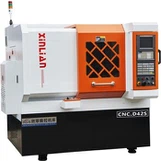
 High Speed Inclined Rail Machine1、The spindle of the machine tool adopts an advanced barrel structure and the bearings adopt P4Add to Inquiry


- Tel: +86-576-87107811
- Whatsapp: 8613867682635
- Fax: +86-576-87101911
- Email: likangyingleon@gmail.com
- Add: Truman Town, Ma Village of Yuhuan City in Zhejiang Province
why choose us
High Quality
Made of high-quality hard cast iron and annealed to eliminate residual stress and ensure the stability and toughness of the material.
One-stop Solution
The company integrates R&D, production and sales to solve all product-related problems for you.
24H Online Service
We have professional sales managers who provide you with online service 24 hours a day.
Quality Control
In strict accordance with international standards, each process is inspected during the production process to ensure compliance with standards.
What is CNC Machine?
CNC stands for Computer Numerical Control. A CNC machine is a type of manufacturing equipment that uses computer controls to automate the operation of various machining tools, such as lathes, routers, mills, and grinders. The computer controls the movement and positioning of the machine's cutting tool with high precision and accuracy, allowing for the production of complex parts with consistent quality. CNC machines are widely used in various industries, including automotive, aerospace, medical, and electronics, among others, for their ability to improve productivity, reduce waste, and enhance quality control.
Features of CNC Machine
CNC machines have a range of features that make them versatile and efficient for various manufacturing processes. Here are some common features of CNC machines:
1.Computer Control: CNC machines are controlled by computer programs that provide precise instructions for tool movements, speeds, and other parameters. This allows for automation and repeatability in machining operations.
2.High Precision: CNC machines offer high precision and accuracy, allowing for tight tolerances and consistent part quality. The machines can execute complex movements with minimal error.
3.Multiple Axes: CNC machines typically have multiple axes of movement, such as X, Y, and Z, allowing for three-dimensional machining. Some advanced machines may have additional rotary or tilting axes, enabling more complex operations.
4.Programmable Tooling: CNC machines support different types of tools, such as cutting tools, drills, and milling tools. The tools can be automatically changed and positioned based on the program's instructions, reducing setup time and increasing flexibility.
5.Automatic Tool Changers: Many CNC machines have tool changers that can automatically swap out tools during the machining process. This enables the machine to perform multiple operations without manual intervention.
6.Versatility: CNC machines can perform a wide range of machining operations, including turning, milling, drilling, grinding, and more. This versatility allows for the production of various complex parts on a single machine.
7.CAD/CAM Integration: CNC machines often integrate with computer-aided design (CAD) and computer-aided manufacturing (CAM) software. CAD software is used to design parts, while CAM software generates tool paths and converts them into CNC machine instructions.
8.Feedback Systems: CNC machines may incorporate feedback systems, such as encoders, to monitor tool positions and make real-time adjustments to ensure accuracy and consistency during machining.
9.Safety Features: CNC machines are equipped with safety features, such as emergency stop buttons, protective enclosures, interlocks, and sensors, to ensure operator safety during operation.
10.Data Logging and Monitoring: CNC machines can log data related to machining processes, such as tool usage, cycle times, and error rates. This data can be used for process optimization, maintenance planning, and quality control.
Advantages of CNC Machine
CNC machines offer several advantages over traditional manual machines, including:
Increased Precision
CNC machines can produce parts with extremely high precision and accuracy. They can perform complex cutting operations with consistent quality, eliminating human error and variability.
Improved Efficiency
With CNC machines, multiple operations can be performed in a single setup, reducing cycle time and increasing productivity. Additionally, CNC machines enable unattended operation, allowing the machine to run continuously and freeing up operators for other tasks.
Cost Savings
CNC machines can be programmed to optimize tool usage and reduce material waste, resulting in cost savings on raw materials and tooling expenses. CNC machines also require less physical labor than traditional machines, further reducing operational costs.
Versatility
CNC machines can perform a wide range of operations, from simple drilling and cutting to complex milling and turning. This versatility enables manufacturers to produce a variety of parts with a single machine, eliminating the need for multiple machines.
Improved Safety
CNC machines are equipped with safety features, such as protective enclosures, interlocks, and sensors, to ensure operator safety during operation. They also reduce the risk of injury associated with manual machines, which require more hands-on operation.
Quality Control
CNC machines can be programmed to perform quality control checks during machining, ensuring that each part meets the required specifications. The ability to monitor and adjust machining parameters in real-time also helps to maintain consistent quality throughout production runs.
Material of CNC Machine
CNC machines are typically made from a variety of materials, each chosen for its specific properties and suitability for different machine components. Some common materials used in the construction of CNC machines include:

Cast Iron: Cast iron is often used for the major structural components of CNC machines, such as the machine bed, columns, and bases. It provides excellent vibration damping properties and stability, which are essential for maintaining accuracy during machining operations.
Steel: Steel is commonly used for various machine components, including frames, enclosures, and tooling. It offers high strength, rigidity, and durability, making it suitable for withstanding the forces and stresses encountered during machining.
Aluminum: Aluminum is frequently used for components that require lightweight yet strong material, such as machine housings, covers, and some structural elements. It is also known for its excellent thermal conductivity, which can help dissipate heat generated during machining.
Stainless Steel: Stainless steel may be used for parts that require corrosion resistance, such as guide rails, fasteners, and certain structural components, particularly in applications where exposure to moisture or corrosive environments is a concern.


Plastics and Composites: Certain non-structural components of CNC machines, such as protective covers, electrical enclosures, and cable carriers, may be constructed from various engineering plastics and composites to provide insulation, impact resistance, and other specific properties.
Other Metals: Depending on the specific requirements of the machine, other metals such as brass, bronze, and copper may be used for specialized components, such as bushings, bearings, and electrical contacts.
Craftsmanship of CNC Machine
The craftsmanship involved in CNC machines refers to the precision and skill required in their design, construction, and assembly. While CNC machines are typically manufactured using advanced machining technology, there is still a need for craftsmanship at various stages of the process. Here are some aspects of craftsmanship involved in CNC machine production:
Design
The design of a CNC machine requires careful consideration of factors such as structural integrity, stability, functionality, and ease of use. Craftsmanship comes into play when determining the optimal placement of components, ensuring smooth movement of axes, and incorporating features that enhance performance and reliability.
01
Machining and Fabrication
CNC machines are often made using other CNC machines or traditional machining equipment. Craftsmanship is crucial during the machining and fabrication process to ensure that critical dimensions, tolerances, and surface finishes are achieved accurately. Skilled machinists and operators work diligently to create precise components that fit together seamlessly.
02
Assembly and Alignment
Assembling a CNC machine involves fitting together various components, such as the machine bed, columns, axes, spindle, and controls. Craftsmanship is essential during this stage to ensure proper alignment, smooth movement, and accurate positioning of the machine's components. This requires meticulous attention to detail and expertise in aligning the axes and other critical elements.
03
Calibration and Testing
Once assembled, CNC machines undergo calibration and testing processes to ensure they meet the required specifications and performance standards. Craftsmanship plays a role in fine-tuning the machine's parameters, verifying accuracy, and identifying and resolving any issues that may impact its performance.
04
Quality Control
Craftsmanship is also involved in quality control measures throughout the manufacturing process. Skilled technicians inspect and test components and finished machines to ensure they meet the desired quality standards. This includes checking for dimensional accuracy, smooth operation, proper functionality of controls, and adherence to safety regulations.
05
Precautions for use CNC Machine
When using a CNC machine, it's important to observe certain precautions to ensure safety, proper operation, and maintenance. Here are some general precautions for using CNC machines:
Training: Only trained and authorized personnel should operate CNC machines. Adequate training on machine operation, programming, and safety procedures is essential to prevent accidents and ensure efficient use of the equipment.
Safety Gear: Operators should wear appropriate personal protective equipment (PPE) such as safety glasses, hearing protection, and, if necessary, gloves and protective clothing to safeguard against potential hazards during machine operation.
Machine Environment: Ensure that the work area around the CNC machine is clean, well-lit, and free from obstructions. Proper ventilation and appropriate lighting can contribute to a safe and productive working environment.
Material Handling: Follow safe handling practices when loading and unloading materials into the CNC machine. Use lifting equipment or assistance as needed to prevent injuries from heavy or awkwardly shaped materials.
Tooling and Workholding: Inspect tooling and workholding fixtures for damage or wear before use. Ensure that cutting tools are securely mounted and properly aligned, and that workpieces are firmly held in place to prevent movement during machining.
Programming and Setup: Verify the CNC program and machine setup before beginning a machining operation. Check for any potential collisions, tooling issues, or setup errors that could compromise safety or quality.
Emergency Stop and Safety Devices: Familiarize yourself with the location and operation of emergency stop buttons, interlocks, and other safety devices on the CNC machine. Be prepared to act quickly in the event of an emergency.
Regular Maintenance: Follow the manufacturer's recommended maintenance schedule for the CNC machine. This includes routine inspections, lubrication, and calibration to ensure optimal performance and longevity of the equipment.
Housekeeping: Keep the work area around the CNC machine clean and organized. Proper housekeeping reduces the risk of slips, trips, and falls, and helps maintain a safe and efficient workspace.
Supervision: Do not leave a running CNC machine unattended unless it is specifically designed for unmanned operation. Regularly monitor the machine during operation to address any issues that may arise.
our equipment


FAQ
Q: What does CNC stand for?
Q: How does a CNC machine work?
Q: What are the main types of CNC machines?
Q: What materials can be processed using CNC machines?
Q: What are the advantages of using CNC machines?
Q: What are the key components of a CNC machine?
Q: What programming languages are used for CNC machines?
Q: How are CNC machines programmed?
Q: What safety precautions should be taken when operating CNC machines?
Q: What is the difference between 3-axis and 5-axis CNC machines?
Q: Can CNC machines be used for prototyping?
Q: What is CNC machining tolerance?
Q: How are CNC machines calibrated?
Q: What are the common applications of CNC machines?
Q: Can CNC machines be integrated with robotics?
Q: What maintenance tasks are required for CNC machines?
Q: Can CNC machines be used for additive manufacturing?
Q: What software is commonly used for CNC programming?
Q: What is the difference between CNC milling and CNC turning?
Q: How do CNC machines contribute to industry 4.0 and smart manufacturing?
We're well-known as one of the leading CNC machine manufacturers and suppliers in China. Our factory offers high quality CNC machine made in China with low price. Welcome to contact us for customized service and quotation.
