


Hard Rail Machine Tool
Zhejiang Hao Feng CNC Technology Co., Ltd. is a high-quality manufacturer with 30 years of production experience. The company mainly produces: series of CNC machine tools, inclined bed linear rail CNC machine tools, turning and milling compound machine tools, CNC special machines, etc. As one of the earliest companies to manufacture machine tools, the company has its own quality inspection workshop and consistently implements the provisions of the ISO9001 quality management system. It is deeply favored by customers in overseas markets.

01
High Quality
Made of high-quality hard cast iron and annealed to eliminate residual stress and ensure the stability and toughness of the material.
02
One-stop Solution
The company integrates R&D, production and sales to solve all product-related problems for you.
03
24H Online Service
We have professional sales managers who provide you with online service 24 hours a day.
04
Quality Control
In strict accordance with international standards, each process is inspected during the production process to ensure compliance with standards.
-
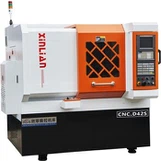
 Double-axis Hard Rail Machine1、the machine tool X / Z two axis slide rail are used in Taiwan on the silver provided P level.Add to Inquiry
 -
 Hard Rail CNC Machine◆Features grooving, handling and carious line drilling on turned cylindrical, tapered, curved, endAdd to Inquiry


- Tel: +86-576-87107811
- Whatsapp: 8613867682635
- Fax: +86-576-87101911
- Email: likangyingleon@gmail.com
- Add: Truman Town, Ma Village of Yuhuan City in Zhejiang Province
A "Hard Rail Machine Tool" typically refers to a type of machine tool, such as a CNC machining center or milling machine, that utilizes a rigid and durable rail system for guiding the movement of its components.Machine tools with hard rail systems are often chosen for applications that require high precision, heavy cutting loads, and consistent performance. The use of hard rails contributes to the overall rigidity and accuracy of the machine, making it suitable for demanding machining tasks in various industrial settings.
Features of hard rail machine tool
The features of a hard rail machine tool, which typically refers to a CNC machining center or milling machine with a rigid and durable rail system, include the following:
1.Rigidity: Hard rail machine tools are designed to provide high rigidity, ensuring minimal deflection during cutting operations. This rigidity contributes to the accuracy and stability of the machining process.
2.Durability: The guide rails in hard rail machine tools are made of hardened steel or other durable materials, offering resistance to wear and providing long-term reliability.
3.Precision: The use of hard rails facilitates precise motion control, allowing for accurate positioning of the machine's moving components, such as the table or spindle. This precision is essential for achieving tight tolerances in machined parts.
4.Stability: The hardened rails and their corresponding bearing systems contribute to the overall stability of the machine tool, minimizing vibration and ensuring consistent cutting performance.
5.Heavy-Duty Capabilities: Hard rail machine tools are often capable of handling heavy cutting loads and demanding machining tasks, making them suitable for applications that require robust performance.
6.Long-Term Accuracy: The durable nature of the hard rail system helps maintain the machine tool's accuracy over extended periods of use, contributing to its longevity and reliability.
7.Suitable for Various Materials: Hard rail machine tools can be used for machining a wide range of materials, including metals, plastics, composites, and more, due to their stable and precise motion control.
Advantages of hard rail machine tool
The advantages of hard rail machine tools, which typically refers to a CNC machining center or milling machine with a rigid and durable rail system, include the following:
High Precision
Hard rail machine tools provide precise motion control, allowing for accurate positioning of the machine's moving components. This precision is essential for achieving tight tolerances in machined parts.
Excellent Rigidity
Hard rail machine tools are designed to provide high rigidity, ensuring minimal deflection during cutting operations. This rigidity contributes to the accuracy and stability of the machining process.
Long-Term Reliability
The guide rails in hard rail machine tools are made of hardened steel or other durable materials, offering resistance to wear and providing long-term reliability.
Suitable for Heavy-Duty Cutting
Hard rail machine tools are capable of handling heavy cutting loads and demanding machining tasks, making them ideal for applications that require robust performance.
Consistent Performance
The hardened rails and their corresponding bearing systems contribute to the overall stability of the machine tool, minimizing vibration and ensuring consistent cutting performance.
Versatility
Hard rail machine tools can be used for machining a wide range of materials, including metals, plastics, composites, and more, due to their stable and precise motion control.
Common types of hard rail machine tool
The company conducted a competitive advantage analysis to identify its strengths and weaknesses compared to its rivals.
CNC Vertical Machining Centers
These machines feature a vertical spindle orientation and are commonly used for milling, drilling, and other machining operations. They are known for their versatility and are widely used in various industries.
01
CNC Horizontal Machining Centers
Horizontal machining centers have a horizontal spindle orientation and are suitable for heavy-duty machining of large and complex workpieces. They often feature hardened rails to provide stability and precision.
02
CNC Milling Machines
Both vertical and horizontal milling machines can be equipped with hard rail systems to ensure rigidity and accuracy during the milling process. These machines are essential for creating precise shapes and features on workpieces.
03
CNC Drilling Machines
Hard rail systems can also be found in CNC drilling machines, ensuring precise positioning and stability during drilling operations.
04
CNC Turning Centers
While turning centers primarily focus on cylindrical parts and turning operations, they may incorporate hard rail systems in the machine structure to maintain stability and accuracy during cutting.
05
Application of hard rail machine tool
Hard rail machine tools find application in a wide range of industries and manufacturing processes due to their precision, stability, and capability to handle heavy-duty tasks. Some common applications of hard rail machine tools include:

Aerospace Manufacturing: Hard rail machining centers are used to produce complex components for aircraft and spacecraft, such as structural parts, engine components, and aerospace hardware.
Automotive Industry: Hard rail machine tools play a crucial role in the production of automotive parts, including engine components, transmission parts, chassis components, and other precision parts required in vehicle manufacturing.
Mold and Die Making: Hard rail machines are utilized in the production of molds and dies for injection molding, die casting, and stamping processes. The high precision and rigidity of these machines are essential for creating accurate tooling.
Tool and Die Manufacturing: Manufacturers use hard rail machining centers to produce various cutting tools, fixtures, and other tooling components required in the machining industry.


Medical Device Manufacturing: Hard rail machine tools are employed to fabricate precision components for medical devices, such as implants, surgical instruments, and prosthetics, where tight tolerances and high-quality surface finishes are critical.
Heavy Equipment Manufacturing: Industries involved in producing heavy machinery, industrial equipment, and large components rely on hard rail machines for machining operations that demand stability and accuracy.
What components does the hard rail machine tool consist of?
Hard rail machine tools consist of several key components that work together to enable precision machining operations. These components include:
Machine Bed
The machine bed forms the foundation of the machine tool and provides a stable base for supporting other components. It is typically made of heavy-duty cast iron or welded steel to ensure rigidity and dampening of vibrations.
Hardened Guide Rails
Hard rail machine tools are characterized by their use of hardened guide rails, also known as box ways or linear guides, to provide linear motion and support for the machine's moving components. These guide rails are precision-ground and hardened to resist wear and maintain accuracy over extended periods of use.
Spindle
The spindle is the rotating shaft responsible for holding the cutting tool and performing various machining operations, such as milling, drilling, or turning. Spindles in hard rail machines are designed for high rigidity and precision to accommodate heavy cutting forces and achieve accurate surface finishes.
Tool Changer
Many hard rail machining centers are equipped with automatic tool changers that allow for the efficient swapping of cutting tools during machining processes. This component enhances productivity by reducing downtime associated with manual tool changes.
Control System
The control system, often based on CNC (Computer Numerical Control) technology, governs the movement of the machine's axes, tool changes, spindle speed, and feed rates. It enables precise control over the machining process and allows for the execution of complex part programs.
Cutting Tool Holding Devices
These devices, such as tool holders, collets, and chucks, securely grip the cutting tools in place and provide the interface between the spindle and the tool.
Drive Systems
Hard rail machine tools utilize various drive systems, ncluding ball screws, linear motors, and servo motors, to convert rotary motion into linear motion and drive the movement of the machine axes with high precision.
Cooling and Chip Evacuation Systems
These systems, such as coolant pumps, chip conveyors, and chip augers, are essential for maintaining temperature control, removing chips from the work area, and prolonging tool life during machining operations.
Control Panel and Operator Interface
The control panel provides the operator with a user-friendly interface for programming, monitoring, and adjusting machine parameters, as well as accessing diagnostic information.
Craftsmanship of hard rail machine tool
Hard rail machine tools find application in a wide range of industries and manufacturing processes due to their precision, stability, and capability to handle heavy-duty tasks. Some common applications of hard rail machine tools include:
Aerospace Manufacturing: Hard rail machining centers are used to produce complex components for aircraft and spacecraft, such as structural parts, engine components, and aerospace hardware.
Automotive Industry: Hard rail machine tools play a crucial role in the production of automotive parts, including engine components, transmission parts, chassis components, and other precision parts required in vehicle manufacturing.
Mold and Die Making: Hard rail machines are utilized in the production of molds and dies for injection molding, die casting, and stamping processes. The high precision and rigidity of these machines are essential for creating accurate tooling.
Tool and Die Manufacturing: Manufacturers use hard rail machining centers to produce various cutting tools, fixtures, and other tooling components required in the machining industry.
Medical Device Manufacturing: Hard rail machine tools are employed to fabricate precision components for medical devices, such as implants, surgical instruments, and prosthetics, where tight tolerances and high-quality surface finishes are critical.
Heavy Equipment Manufacturing: Industries involved in producing heavy machinery, industrial equipment, and large components rely on hard rail machines for machining operations that demand stability and accuracy.
General Contract Machining: Job shops and contract manufacturers utilize hard rail machine tools to serve a diverse range of industries, providing precision machining services for custom parts and components.
FAQ
Q: What is a hard rail machine tool?
Q: What are the advantages of hard rail machine tools?
Q: What are the typical applications of hard rail machine tools?
Q: How does the hardened guide rail system work?
Q: Can hard rail machine tools achieve high precision?
Q: Are hard rail machine tools suitable for heavy-duty cutting?
Q: What types of materials can be machined with hard rail machine tools?
Q: Can hard rail machine tools accommodate multiple axes of motion?
Q: Do hard rail machine tools have automatic tool changers?
Q: What is the role of the spindle in a hard rail machine tool?
Q: How are hard rail machine tools programmed?
Q: Can hard rail machine tools perform complex machining operations?
Q: Are hard rail machine tools easy to maintain?
Q: Can hard rail machine tools be customized for specific applications?
Q: What safety measures are implemented in hard rail machine tools?
Q: How long do hard rail machine tools last?
Q: Can hard rail machine tools be upgraded or retrofitted?
Q: Can hard rail machine tools be integrated into a manufacturing cell or production line?
We're well-known as one of the leading hard rail machine tool manufacturers and suppliers in China. Our factory offers high quality hard rail machine tool made in China with low price. Welcome to contact us for customized service and quotation.
