


Mill Turn Lathe
Your Leading Mill Turn Lathe Supplier!
Zhejiang Hao Feng CNC Technology Co., Ltd. is a high-quality manufacturer with 30 years of production experience. The company mainly produces: series of CNC machine tools, inclined bed linear rail CNC machine tools, turning and milling compound machine tools, CNC special machines, etc. As one of the earliest companies to manufacture machine tools, the company has its own quality inspection workshop and consistently implements the provisions of the ISO9001 quality management system. It is deeply favored by customers in overseas markets.

1High Quality
Made of high-quality hard cast iron and annealed to eliminate residual stress and ensure the stability and toughness of the material.
One-stop Solution
The company integrates R&D, production and sales to solve all product-related problems for you.
24H Online Service
We have professional sales managers who provide you with online service 24 hours a day.
Quality Control
In strict accordance with international standards, every process is inspected to ensure compliance with standards.
-
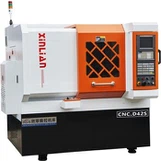
 CNC Mill Turn Lathe◆Features grooving, handling and carious line drilling on turned cylindrical, tapered, curved, end and tangential surfaces.. ◆Applicable to the use of auto and motorcycle parts, valves, power tools,Add to Inquiry
 -
 Inclined CNC Mill Turn Lathe1、Straight row of high efficiency.precision ball screw vice more accurate.. 2、Totally enclosed protection, better protection of rail, wire rod and bearing.. 3、The castings of machine tools are allAdd to Inquiry


- Tel: +86-576-87107811
- Whatsapp: 8613867682635
- Fax: +86-576-87101911
- Email: likangyingleon@gmail.com
- Add: Truman Town, Ma Village of Yuhuan City in Zhejiang Province

What is Mill Turn Lathe?
A Mill Turn Lathe is a type of advanced CNC machine tool that combines the capabilities of both a milling machine and a lathe. It allows for the complete machining of complex parts in a single setup, which can increase efficiency and reduce setup time. The machine has a rotating spindle that can hold tools for both milling and turning operations, as well as a rotating workpiece that can be moved in multiple axes. This allows for a wide range of cutting operations to be performed on the workpiece, including drilling, facing, grooving, and threading, among others. Mill Turn Lathes are commonly used in the aerospace, automotive, and medical industries, among others.
Product Features Of Mill Turn Lathe
The specific features of a Mill Turn Lathe can vary depending on the manufacturer and model, but here are some common product features:
Multi-axis capabilities
Mill Turn Lathes typically have multiple axes of movement, including X, Y, and Z axes, as well as rotating spindle and workpiece capabilities. This allows for complex machining operations.
Dual functionality
These machines combine milling and turning operations in a single setup, eliminating the need for multiple machines and reducing production time.
Automatic tool changer
Mill Turn Lathes often come equipped with an automatic tool changer, allowing for quick and seamless tool changes during machining operations.
Live tooling
Some Mill Turn Lathes feature live tooling, which means that the cutting tools can rotate and perform milling operations while the workpiece is stationary. This expands the range of operations that can be performed.
Programmable controls
These machines are typically controlled by computer numerical control (CNC) systems, allowing for precise and programmable machining operations.
High precision
Mill Turn Lathes are designed to provide high accuracy and repeatability, ensuring that machined parts meet tight tolerances.
Versatility
These machines can handle a wide range of materials, from metals to plastics, and can accommodate various part sizes and shapes.
Integrated software
Many Mill Turn Lathes come with integrated software for programming, simulation, and monitoring of machining operations, enhancing productivity and ease of use.
Advantages of Mill Turn Lathe
Mill Turn Lathes offer several advantages over traditional machining methods. Some of the key advantages include:
Increased Productivity: Mill Turn Lathes allow for the complete machining of complex parts in a single setup, reducing the need for multiple machines and setups. This leads to improved productivity and reduced cycle times.
Enhanced Accuracy And Precision: These machines are designed to provide high levels of accuracy and repeatability. With multi-axis movement and programmable controls, they can achieve precise machining results, ensuring tight tolerances and high-quality finished parts.
Reduction In Setup Time: By combining milling and turning operations into one machine, Mill Turn Lathes eliminate the need for transferring and repositioning workpieces between different machines. This significantly reduces setup time and increases overall efficiency.
Improved Part Quality: The integrated nature of Mill Turn Lathes helps to minimize errors and inconsistencies that can occur when using separate machines. This leads to improved part quality and consistency throughout the production process.
Versatility In Machining Capabilities: Mill Turn Lathes offer a wide range of machining capabilities, including drilling, milling, turning, grooving, threading, and more. This versatility allows for the production of complex and intricate parts with different geometries.
Cost Savings: Although Mill Turn Lathes can be a significant investment, their ability to combine multiple machining operations into a single machine can ultimately lead to cost savings. The reduction in setup time, increased productivity, and improved part quality contribute to overall cost efficiencies.
Common types of Mill Turn Lathe
There are various types of Mill Turn Lathes available in the market, each with its own specific features and capabilities. Here are some common types:
Twin-Spindle Machines
These Mill Turn Lathes have two spindles, one on the main turret and another on the sub-turret. This allows for simultaneous machining on both ends of the workpiece, reducing cycle time and increasing efficiency. Twin-spindle machines are ideal for high-volume production and complex parts.
Multi-Turret Machines
These Mill Turn Lathes have multiple turrets, typically two or more, allowing for simultaneous machining with different tools. Multi-turret machines are suitable for complex parts that require a variety of cutting operations.
Swiss-Type Machines
Swiss-type Mill Turn Lathes are known for their ability to perform precision turning operations on small, intricate parts. These machines feature a sliding headstock and guide bushing, providing excellent stability and accuracy. Swiss-type machines are commonly used in industries such as watchmaking, medical devices, and electronics.
B-axis Machines
B-axis Mill Turn Lathes have an additional rotational axis, known as the B-axis, which allows the spindle to tilt and perform angled milling operations. This enables the machine to produce complex geometries and contours without repositioning the workpiece.
Horizontal Machines
Horizontal Mill Turn Lathes have a horizontal orientation, with the workpiece mounted vertically. These machines are often used for heavy-duty machining and are capable of handling large and heavy workpieces.
Vertical Machines
Vertical Mill Turn Lathes have a vertical orientation, with the workpiece mounted horizontally. These machines are versatile and can handle a wide range of part sizes and shapes.
Application of Mill Turn Lathe
Mill Turn Lathes are versatile machines that can be used for a wide range of applications across various industries. Here are some common applications of Mill Turn Lathes:
Aerospace: Mill Turn Lathes are commonly used in the aerospace industry for machining complex parts with tight tolerances, such as engine components, turbine blades, and landing gear parts.
Automotive: Mill Turn Lathes are used in the production of automotive parts, including engine blocks, crankshafts, and camshafts.
Medical: The precision and accuracy of Mill Turn Lathes make them ideal for producing medical components such as implants, surgical instruments, and prosthetics.
Electronics: Mill Turn Lathes are used in the production of electronics components, including connectors, housings, and sensors.
Defense: Mill Turn Lathes are used in the manufacturing of defense equipment such as weapons systems, missile components, and armor plating.
Oil And Gas: Mill Turn Lathes are used in the production of oil and gas equipment, including valves, pumps, and drilling tools.
Industrial Machinery: Mill Turn Lathes are used in the production of industrial machinery components, such as gears, bearings, and hydraulic components.
Tool And Die Making: Mill Turn Lathes are used in the production of tooling components, including molds, dies, and fixtures.
Architectural And Construction: Mill Turn Lathes are used in architectural and construction applications for producing custom metal components such as balusters, railings, and staircases.
Maintenance of Mill Turn Lathe
Regular maintenance of Mill Turn Lathes is essential to ensure optimal performance, extend machine life, and prevent costly repairs. Here are some maintenance tips for Mill Turn Lathes:
Clean the machine regularly by removing chips, swarf, and coolant residue. Use a brush or air compressor to remove debris and wipe down the machine with a clean cloth.
Check the levels of hydraulic oil, coolant, and lubricant regularly. Replace fluids as needed according to the manufacturer's recommendations.
Check and replace filters, such as air, oil, and coolant filters, on a regular basis. Dirty filters can reduce machine performance and cause damage to internal components.
Apply appropriate lubrication to moving parts, such as bearings, gears, and slides, to prevent friction and wear. Be sure to use the recommended lubricants and follow the manufacturer's guidelines.
Check the belts and chains regularly for wear and tension. Adjust or replace them as necessary to ensure proper machine operation.
Inspect and calibrate cutting tools regularly to ensure they are in good condition and performing accurately. Replace worn or damaged tools promptly.
Perform regular maintenance checks of the machine, including checking for loose bolts, worn-out seals, and damaged components. Address any issues promptly to prevent further damage to the machine.
FAQ
Q: What is the difference between a mill and a lathe turn?
Q: What is mill turning?
Q: How does a Mill Turn Lathe work?
Q: What are the advantages of using a Mill Turn Lathe?
Q: Can Mill Turn Lathes handle large workpieces?
Q: Are Mill Turn Lathes suitable for high-volume production?
Q: What types of materials can be machined on a Mill Turn Lathe?
Q: Can Mill Turn Lathes perform 5-axis machining?
Q: What is the difference between a Mill Turn Lathe and a CNC lathe?
Q: Can Mill Turn Lathes perform threading operations?
Q: Can Mill Turn Lathes perform drilling operations?
Q: Are Mill Turn Lathes suitable for prototyping?
Q: What is the accuracy of Mill Turn Lathes?
Q: Can Mill Turn Lathes perform live tooling operations?
Q: What is the spindle speed range of Mill Turn Lathes?
Q: Can Mill Turn Lathes perform contouring and profiling operations?
Q: Can Mill Turn Lathes handle bar stock?
Q: What is the maximum turning diameter that a Mill Turn Lathe can handle?
Q: Are Mill Turn Lathes suitable for small batch production?
Q: Can Mill Turn Lathes perform milling operations on curved surfaces?
We're well-known as one of the leading mill turn lathe manufacturers and suppliers in China. Our factory offers high quality mill turn lathe made in China with low price. Welcome to contact us for customized service and quotation.
